Summer heat causes rubber window seals to dry out, crack, and pull away from the glass, which leads to water leaks, wind noise, and accelerated wear on the glass edges themselves. At Defender Auto Glass, we serve Northeast Ohio from four locations in Mentor, Chardon, Akron, and Elyria, offering professional window seal inspection and replacement as part of our complete auto glass services. If you have been noticing unusual cabin noise, moisture inside the vehicle, or visible rubber deterioration around any of your windows, summer is the season to take it seriously.
What Are Window Seals and Why Do They Matter for Your Auto Glass?
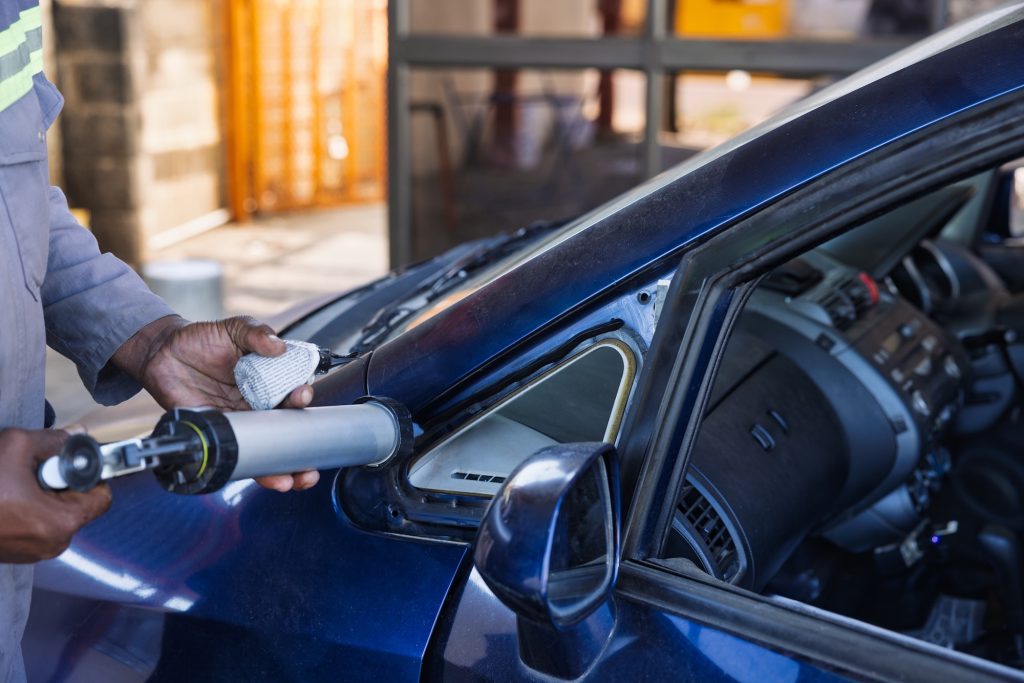
Window seals are the rubber or polymer gaskets that run along the perimeter of every piece of glass on your vehicle, including your windshield, rear glass, and side windows. Their job is to bond the glass to the vehicle body, block water from entering the cabin, reduce road noise, and hold the glass in its correct position while the vehicle flexes over uneven roads.
Most drivers never think about their window seals until something goes wrong. But these seals do more structural work than they appear to. On a modern vehicle, the windshield is bonded to the frame with urethane adhesive and held in place with a rubber molding that also seals out wind and moisture. If that seal degrades, the urethane bond beneath it is exposed to the elements. Over time, that exposure weakens the adhesive that contributes to your windshield’s structural role in the vehicle.
For side windows and rear glass, the seal channels the glass through the window regulator as it moves up and down and keeps rain from working its way into the door cavity. A compromised seal there does not just let water in. It can also cause scratches on the glass edge every time you lower or raise the window, eventually leading to damage that requires full car window replacement rather than a simple seal repair.
How High Summer Temperatures Degrade Rubber Window Seals Over Time
Car window seal damage from summer heat is a gradual process, which makes it easy to miss until the damage is already significant. Rubber compounds used in automotive window seals are designed to handle a broad temperature range, but sustained exposure to high heat causes the material to lose its elasticity. The oils and plasticizers inside the rubber slowly evaporate when temperatures climb repeatedly into the upper range, leaving the material brittle and prone to cracking.
In Northeast Ohio, summer temperatures combined with direct sun exposure push the surface of a parked vehicle well above the ambient air temperature. Dashboard and interior surface temperatures in a closed car on a hot summer day can reach extreme levels, as widely documented by automotive researchers and federal safety organizations. The rubber seals around your glass are exposed to that same heat cycle day after day throughout the season.
The problem compounds because rubber contracts and expands with temperature changes. Every morning the seal contracts slightly in cooler air, and every afternoon it expands under direct sun. Repeated cycles of thermal stress cause micro-fractures to form in the rubber. Those micro-fractures are invisible at first, but they are where water and UV radiation begin to do additional damage. By the time a seal looks visibly cracked or shrunken, the degradation has been progressing for some time.
Vehicles parked outdoors or in uncovered lots throughout the summer are most susceptible, though even garage-kept vehicles are not immune if the garage is unventilated and retains heat. Vehicles with dark exterior paint or tinted glass also tend to experience more cumulative seal stress because darker surfaces absorb more radiant heat from the sun.
Warning Signs Your Window Seals Are Failing This Summer
The most common early sign of car window seal damage from summer heat is wind noise that was not there before. A small gap where the seal has pulled away from the glass or vehicle body creates turbulence at highway speeds, producing a low whistle or hiss that seems to come from the edge of the glass. Many drivers assume this is a door alignment issue, but the seal is the first place to investigate.
Water intrusion is the next sign to watch for, and it often appears inside the door or along the base of the windshield pillar before you ever see a drip inside the cabin. If you notice damp carpet near the base of the A-pillar after a rainstorm, or moisture building up inside a door panel, a degraded seal is the likely source. Left unaddressed, that moisture will work into the vehicle’s structural foam and begin to cause rust in the door cavity or floor pan.
Visible deterioration is worth checking for even before symptoms appear. Walk around your vehicle and look at the rubber trim running along the edge of each piece of glass. Seals in good condition have a consistent profile without gaps, tears, or sections that have lifted away from the surface. Sections of rubber that have become gray and chalky, developed surface cracks, or appear compressed and flattened in spots are all signs that the material is no longer performing as intended.
For drivers who have recently had windshield replacement and are now noticing noise or moisture, it is worth having the installation inspected as well. An improperly seated windshield can develop seal gaps even with new materials, which is why proper installation procedures and verification matter. If something does not feel right after a recent service, a professional inspection is the safest next step.

Professional Window Seal Inspection and Replacement: What to Expect from Defender Auto Glass
Addressing car window seal damage from summer heat is not a project that benefits from improvisation. Hardware store sealants and trim adhesives are not formulated for automotive glass applications, and applying the wrong product can interfere with a proper repair later or trap moisture against the vehicle body where it will cause rust.
When Defender Auto Glass inspects a vehicle for seal issues, the focus is on identifying whether the problem is isolated to the rubber trim molding, whether the underlying adhesive bond has been compromised, or whether glass damage has occurred as a result of the failed seal. That distinction matters because the appropriate repair is different in each case. A trim molding that has simply pulled away can often be reseated or replaced without disturbing the glass. But if moisture has worked its way beneath the urethane bond on a windshield, the glass may need to be removed, the frame cleaned and prepared, and the windshield reinstalled with fresh adhesive.
If you have already noticed moisture damage or glass edge scratching from a degraded side window seal, acting sooner matters. Scratches on tempered side glass from a worn channel seal are not repairable the way a windshield chip is. Tempered glass that has been surface-scratched will continue to accumulate damage with each window operation. The Defender team can assess whether the glass itself has been compromised or whether replacing the seal will resolve the issue without requiring full window replacement.
Defender Auto Glass also offers mobile service for customers throughout Northeast Ohio who cannot conveniently bring a vehicle in, which makes it practical to address seal concerns before a minor problem becomes a water intrusion or structural issue. If you have been searching for car window seal repair near me, auto glass repair near me, or windshield replacement near me, our team can help you sort out the right next step.
Schedule Your Inspection Today
If you have noticed wind noise, moisture inside your cabin, or visible deterioration around any of your vehicle’s glass, Defender Auto Glass can help. Acting before the damage spreads beyond the seal protects your interior, your glass, and the structural integrity of your vehicle.
- Mentor Repair Facility: 7588 Tyler Boulevard, Mentor, Ohio 44060
- Chardon Repair Facility: 540 Fifth Avenue, Chardon, Ohio 44024
- Akron Repair Facility: 1203 George Washington Boulevard, Akron, Ohio 44312
- Elyria Repair Facility: 747 Sugar Lane, Elyria, OH 44035
To request a quote or schedule a professional inspection, visit defenderautoglass.com/online-quote. Mobile service is available throughout Northeast Ohio, including Mentor, Chardon, Akron, Elyria, and the surrounding communities, so there is no need to rearrange your schedule to get the service your vehicle needs.
FAQs
Is window seal damage covered by auto insurance?
In most cases, window seal replacement falls under general maintenance and is not covered by a standard comprehensive claim the way glass breakage is. However, if a seal failure contributed to water damage to the vehicle interior or electrical components, it is worth reviewing the specifics of your policy. Defender Auto Glass works with insurance providers on covered glass services, and our team can help clarify what your coverage applies to when you schedule an inspection.
Does a small gap in a window seal cause water damage or just wind noise?
A gap that only produces noise has not yet allowed significant moisture intrusion, but the two conditions rarely stay separate for long. Once a seal has lifted in one section, normal vehicle flex during driving causes that section to work and widen. What begins as a noise issue typically becomes a water issue within one or two seasons if it is not addressed. We recommend getting a professional assessment as soon as the noise appears rather than waiting for visible moisture.
Is summer the right time to replace window seals, or is it better to wait until fall?
Summer is actually an appropriate time to have seals inspected and replaced because the warmer ambient temperature allows adhesives and sealants to cure properly. Cold-weather installation of some seal materials is more challenging and requires additional steps. Scheduling service with Defender Auto Glass during summer months means the installation conditions are straightforward and the curing time is minimized.
Can I inspect my own window seals without professional help?
A basic visual check is something any driver can do. Look along the full perimeter of each piece of glass for sections that have separated from the body or glass surface, visible surface cracking, or rubber that appears discolored, flattened, or compressed unevenly. What a professional inspection adds is an assessment of the condition of the adhesive bond beneath the trim molding, and a test for water intrusion that may not yet be visible from the outside. Defender Auto Glass can identify issues that a surface inspection alone would miss.
Does seal damage affect ADAS performance on my vehicle?
Seal degradation alone does not typically affect camera or sensor calibration. However, if a compromised seal leads to windshield removal and reinstallation, recalibration of any forward-facing cameras mounted to the glass will be required before those systems will function accurately. Defender Auto Glass performs ADAS recalibration as part of windshield replacement service on equipped vehicles, ensuring the full system is restored to proper function after any work that involves removing the glass.